Science News
 American
Science News for 16 January 2015
American
Science News for 16 January 2015
20-ton magnet heads to New York
Symmetry Magazine - 16 Jan 2015 23:10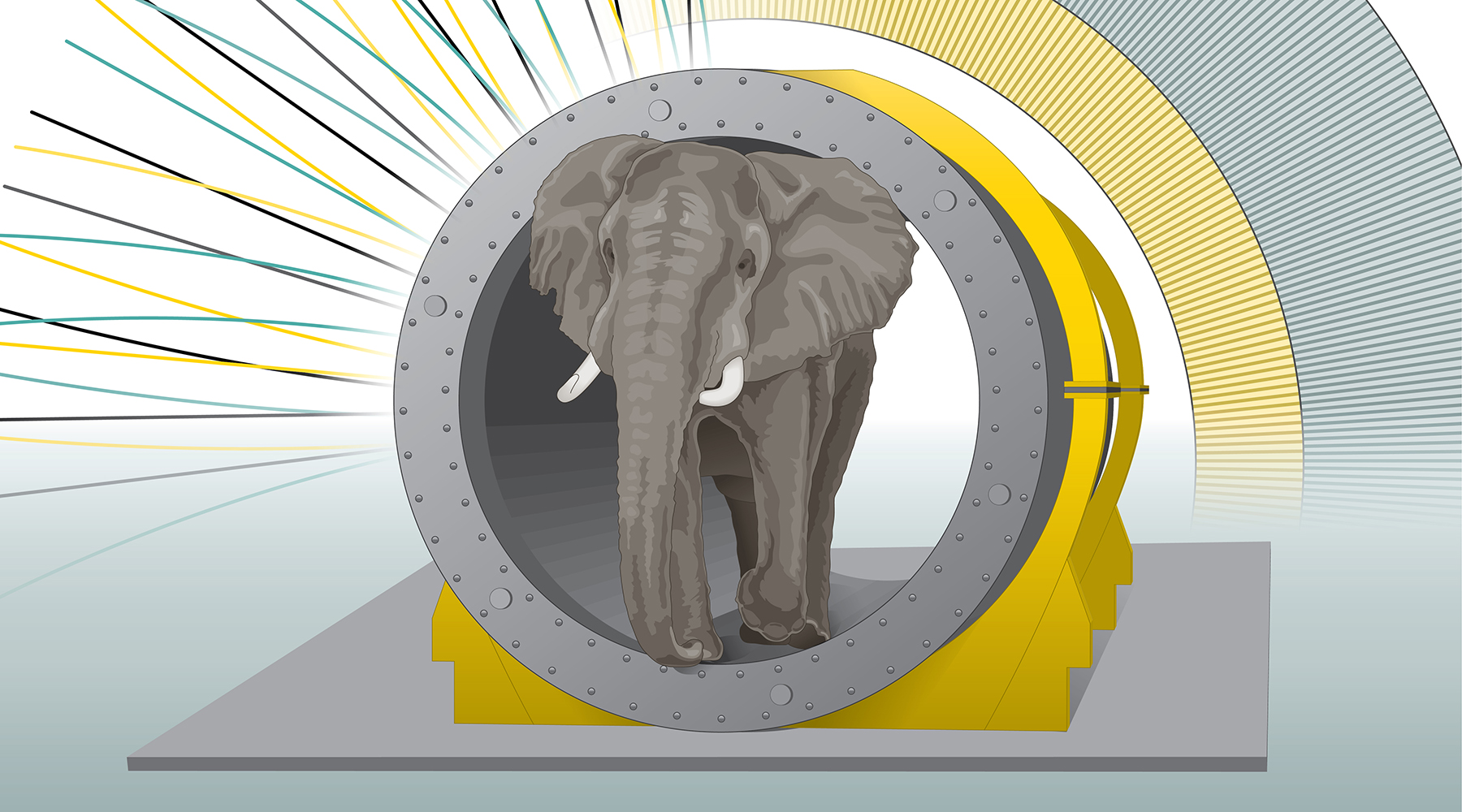 A superconducting magnet begins its journey from SLAC laboratory in California to Brookhaven Lab in New York. Imagine an MRI magnet with a central chamber spanning some 9 feet—massive enough to accommodate a standing A...
Deep-Fried Graphene Spheres Could Make Good Battery Materials
Scientific American - 16 Jan 2015 17:15 Scientists sprayed graphene precursors into hot solvent to form pom-pom-like particles suitable for battery electrodes --
How 'Quantum Dots' Could Probe Mysteries of Entanglement
Live Science - 16 Jan 2015 14:04 Quantum dot masers could help develop quantum computers and probe the mysteries of entanglement.
Rice-sized laser, powered one electron at a time, bodes well for quantum computing
e! Science News - 16 Jan 2015 01:14
Princeton University researchers have built a rice grain-sized laser powered by single electrons tunneling through artificial atoms known as quantum dots. The tiny microwave laser, or "maser," is a demonstration of the f...
Best Yoga Apps
Live Science - 16 Jan 2015 23:51 Whether you are an advanced yogi, or just learning the basic yoga poses, there are apps that can help you. We checked out available yoga apps, and here are our favorites.
Risky Cocktail: Many Americans May Mix Alcohol with Medications
Live Science - 16 Jan 2015 23:09 More than 40 percent of Americans who drink alcohol also take medications that may interact with their booze, a new study finds.
The Evolution of a Scientific American Information Graphic: Clues to Dampening Pain
Scientific American - 16 Jan 2015 22:35 Every graphic is a new adventure. Some of our magazine articles involve abstract concepts that require lots of time and energy at the front-end, making decisions about what, exactly should be... --
National Geographic: First Glimpse of the Hidden Cosmos
Live Science - 16 Jan 2015 22:19 Dark matter and dark energy can't be seen, but that doesn't mean they don't yield stunning images.
What's the Secret to Getting Kids to Eat Veggies? Let Them Play First!
Live Science - 16 Jan 2015 21:54 When recess takes place before lunch -- as opposed to after -- kids eat 54 percent more fruits and veggies, a new study shows.
First anti-obesity electronic implant wins US approval
New Scientist - 16 Jan 2015 20:17
A new device to treat obesity blocks nerve signals between the brain and stomach to suppress appetite - but its effects are small
Today on New Scientist
New Scientist - 16 Jan 2015 19:30
All the latest on newscientist.com: five eureka moments lost in history, have sex then chew off your genitals, rollercoaster for geese and more
This Week's Awesome Stories from Around the Web (Through Jan 17)
Singularity Hub - 16 Jan 2015 19:00 This week saw a slew of stories about how well computers are getting to know us and how that will be good for everyone...depending on your point of view, of course. Enjoy...
New evidence for anthropic theory that fundamental physics constants underlie life-enabling universe
Phys.org - 16 Jan 2015 19:00 For nearly half a century, theoretical physicists have made a series of discoveries that certain constants in fundamental physics seem extraordinarily fine-tuned to allow for the emergence of a life-enabling universe. Co...
Mice are first pioneers of medical micromissiles
New Scientist - 16 Jan 2015 18:30
Tiny machines powered by stomach acid have been tested in live mice, and could one day deliver drugs directly into the stomach lining
2014 Was Earth's Hottest Year On Record
Live Science - 16 Jan 2015 18:11 Global temperatures in 2014 shattered earlier records, making 2014 the hottest year since 1880.
Eureka relived: Rogue boiling points
New Scientist - 16 Jan 2015 18:00
We all know that water boils at 100 °C. So was the 18th-century scientist who pushed the boiling point to 112 °C wrong? There was only one way to find out (full text available to subscribers)
Extreme Submarine, 1915
Scientific American - 16 Jan 2015 17:00 Reported in Scientific American, This Week in World War I: January 16, 1915 Before the First World War, Simon Lake designed and built some innovative submarines for the U.S. --
Zoologger: Spider has sex, then chews off own genitals
New Scientist - 16 Jan 2015 16:36
Self-castration after once-in-a-lifetime sex helps coin spiders protect their mate from the unwanted attentions of other males
Scientists complete array on Mexican volcano
Symmetry Magazine - 16 Jan 2015 16:00
An international team of astrophysicists has completed an advanced detector to map the most energetic phenomena in the universe. On Thursday, atop Volcán Sierra Negra, on a flat ledge near the highest point in Mexico, t...
Breakthrough lights up metamaterials
Phys.org - 16 Jan 2015 15:37 City College of New York led-team has successfully demonstrated how to both enhance light emission and capture light from metamaterials embedded with light emitting nanocrystals. The breakthrough, headed by physicist Dr....
Beagle 2 spotted on Mars in one piece after 11 years
New Scientist - 16 Jan 2015 15:13
The UK spacecraft thought lost on the surface of Mars in 2003 has now been found. And it might still have useful data that we could one day retrieve
The moment the SpaceX rocket crash-landed on a boat
New Scientist - 16 Jan 2015 14:59
Elon Musk, CEO of SpaceX, tweets dramatic pictures from his firm's recent failed attempt to land a rocket on a boat
 Global
 Great Britain
 Indian
 South Africa